Stockholm Sailing

A 256 nm tour of the Stockholm Archipelago and the Åland Islands.

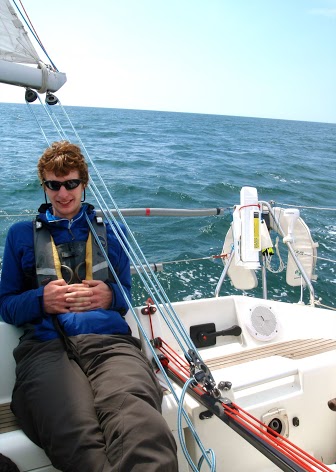
We all arrived at one of the largest marinas in the Baltic, Bullandö, late on Sunday afternoon. We quickly stowed the vast quantities of food and got underway, sailing downwind for about an hour to a quiet anchorage (Munko) for the evening. The next day set the pattern for the rest of the trip – morning swims, sailing through islands, finding a spot for lunch, and more sailing to an evening mooring. After anchoring on the first night, we learnt the Baltic way of dropping the stern anchor and nosing the bow just to the rocks and tying up to a tree or ring. A combination of Swedish and German pilots books, plus recommendations from one of Jo’s colleagues allowed us to pick our lunch and dinner spots. After the first night at Munko, we sailed past Sandhamn to Bjorkskar for lunch, then on to Rödlöga for the evening. The following day, still sailing downwind, we crossed to the Åland Islands, landing at Stegskär. We treated ourselves to a marina (and fish and chips) the next night, at the natural harbour of Käringsund, before learning to tack in slowly increasing winds the following day crossing back to Sweden, stopping opposite a military base on Styrjans Hamn. The weather turned from constant sun to occasional rain, but this didn’t stop us swimming and sailing via Granhamn for lunch, and then through some interesting inter-island passages to Paradisvik/Finnhamn for a sunset mooring. Our final day started with swimming in the rain, then we headed to Säck for lunch and losing each other in the forest, before finally heading to the Bullandö Marina.

Sailing around Mull

Dave is a bit bored of rewriting things, so when this blog post didn’t save the first time round it took a while to get round to doing it again. However, here it is, and hopefully the rest of our trips since the summer will follow shortly.

In August, we found ourselves in Oban on the first sunny day of the season worrying about the lack of wind. We were about to take charge of a charter yacht and have a week sailing with Jo’s parents.

The first few days we had fantastic weather – warm, sunny, just enough wind to get along the long exposed and shelterless south coast of Mull  to a truly amazing anchorage and swimming near Iona with clear (cold) water and blue skies. After a short stop on Iona, the weather was perfect for a sail close around Staffa and Treshnish Isles, where we heard (and saw) lots of seals and birds.  We then anchored in lovely but quite space-limited and rather isolated spot off Gometra (NW Mull) and enjoyed a wonderful sunset.

The next morning our intended fast exit failed when we found all our batteries were flat.  The wind was getting up, and we didn’t really have enough chain out to stay where we were for long (but couldn’t put more out as we would swing onto the rocks). The crew of the other boat in the anchorage had gone ashore, but luckily we were saved from having to sail out of our enclosed bay in gusty winds by a couple of blokes from a nearby fish farm with a spare battery. I was just tightening up the spare battery when Jo shouted something about another boat being quite close. I thought nothing of this and continued connecting the battery until the message was that the boat was within a length of us. By the time I was on deck, the other boat was being pushed off the bow, and a quick check showed that it was them moving not us. By now the wind had picked up considerably, and while the fish farm boat had towed the drifting boat into the back of the bay, they couldn’t make it stick. It soon became clear that this runaway boat was in serious danger of drifting onto rocks/out into the Atlantic, and we didn’t know for certain if anyone was on board or not. On the advice of the coastguard, we carefully manoeuvred our yacht so that Dave could jump between the boats, which required some skilful helming not to ground our own yacht.

I found myself aboard a smart looking Vancouver 34 about to hit some rocks. Thankfully the key was in the ignition and engine started first time, after which I followed Jo to open water. I could then turn the instruments on, get the anchor up and clear the 1 m diameter ball of seaweed off the anchor. After having a few moments to collect my thoughts, I realised I was going to have to anchor this unknown boat single handed. The thought that letting it ground in the bay would be better than it drifting out to sea or being dashed against rocks gave me some comfort. Even once anchored, the excitement continued as I found (or rather didn’t find) the engine is switched off in an unusual place, so I was forced to leave the engine running. Jo did an excellent job of running alongside the anchored boat and picked me off at high speed with only minor bumping as the wind buffeted both boats.

By this time, the rain joined the increasing wind and it was an easy decision to head for Tobermory and a pontoon with little chance of dragging an anchor. Even then it was a long sail round, as we discovered hired sailing waterproofs aren’t waterproof,  although made much better by an entertaining evening in the Mishnish Inn courtesy of the owners of the rescued boat.

Next day we headed across Loch Sunart to Ardnamurchan.  This provided great sailing at first, but as we got further into the narrowing loch, we discovered our charter boat preferred not to go upwind in strong winds and it became rather exciting in a confined space.  We moored in a bay to visit Jo’s parents’ friends, again on a nice strong mooring buoy, and made the (in hindsight) silly decision to go ashore in dinghy.  The wind and waves stronger than expected meant that having got ashore, getting back to the boat was almost impossible and we had to stay ashore for the night and wait for winds to drop
in the morning to get back on board .

After the beautiful weather in the first part of the week, followed by the various excitements, the last couple of days provided some more traditional Scottish sailing, with wind, cloud and some sun. We spent most of the day beating along the Sound of Mull, but this was relaxing all the same.  The last day was sunny again, and with little wind, we drifted and played with porpoises for a hour or so.  Unfortunately, the drifting and associated motoring to get away from ferries and rocks meant that all the batteries were flat again.  We were rescued once more – an easy job this time as we were almost within spitting distance of the charterers.  We have concluded we had just been sailing too much, not using the engine enough and that electric windlasses are silly.

South Coast Sailing

At the end of July, we headed down to Poole on an extremely wet Friday night, all arriving with minutes of each other, despite all being variously delayed by the traffic and weather from four different locations. We then settled into OD1, a Westerly Oceanlord 41, vast compared to Puffin, and tried to understand the constantly shifting forecast to come up with a plan.

Luckily Saturday morning dawned sunny and cloudless, but without being calm. With a forecast of higher winds on Sunday, we switched the original plans for exploring the Jurassic Coast and headed for the Solent. The sailing was good and fast, downwind with full sails, visiting both Old Harry and later the Needles (both of which I almost missed while looking at the chart). The sail up the west Solent was made entertaining by cutting through the middle of a race, requiring fast collision regulation decisions and clear helming. After a quick sail around the entrance to Cowes, we headed in to try and find a berth. Although all the marinas were full, Folly’s Inn had a pontoon for us and we made a quick (rather too fast actually) mooring for the night. Wine, Thai curry and lively games completed a great day’s sailing.

The following day started dry and calm until two minutes after I got on deck when it started raining. We made a start after stocking up on egg and bacon butties for breakfast. Once out of Cowes, we found the wind. Breezy, but without much fetch in the Solent the sailing was good, and luckily the wind stayed in the south as we headed SW. Once out of the Solent via the north passage of the Needles, the rain stopped but was replaced by the building wind and waves regularly covering us in spray. Despite the less than ideal conditions, the crew were all smiles enjoying the boat carving out its unlikely way through the wind and waves. Again the wind had yet to turn, so with a southerly breeze, we had a fast but bumpy sail back to Poole, ducking in behind Old Harry to drop the mainsail, coming into Poole under the genoa. An entertaining dance with the chain ferry (I swear it waits for you to be really close and then moves) and we entered the deserted Poole Harbour as it started to rain again. We paused to wait for the bridge to let us back to our berth then warmed up with tea and cake. An early return, but enjoyable as the sail had been, the high winds meant it was nice to be back on land. After cleaning and clearing the yacht, we had a much more pleasant drive home.

A great weekend with fantastic people, and good to sail a larger boat that was different to Puffin and her usual cruising ground (as much as I love the East coast).

Photos by Povl and Maude.


Wind awareness and capsize drills

Living next to England’s largest reservoir (by surface area) AND not having too many weekends away planned was just too fortuitious a combination of circumstances to miss, so we decided that this autumn we would learn to sail dinghies. Not only would this be fun in its own right, but we also hoped it would help us with sail trim on yachts, and shore up (no pun intended) our general competence with boats and their behaviour.

So we booked a combined Level 1/2 course with the Rutland Sailing School based at Edith Weston, constituting four full days spread over two weekends. Our first day coincided with a national junior sailing event which saw an astonishing quantity of vans and Volvos converge on the sailing school car park. Escaping the chaos, we met our instructor Tony and headed out in a Laser Bahia to learn the basics. Although we were confused by various bits of rope that never get touched on yachts because nobody knows what they do, we made good progress and by the afternoon we were sufficiently practised at tacking and gybing to be allowed to move onto (deliberate) capsizing. This was surprisingly good fun, and not too cold.

Day two was cancelled owing to a comprehensive lack of wind, so we enjoyed an unexpectedly restful day of conker-collecting and picnicing at Burghley Deer Park. A fortnight later we reconvened after a hasty revision session – lots to remember, though I think some of it was beyond Level 2 (one of the hazards of learning to sail with an aero engineer is that things get complicated very quickly). A slightly windier day meant that it was easier to see the boat respond to things we did – ideal conditions for sailing round triangles, picking up buoys, “jetty bashing” and making ourselves dizzy via repeated circuits of floating pontoons. We spent the evening recovering in the rather nice Wheatsheaf pub in Oakham, where they have two log fires and very tasty chips.

On the morning of the final day we were sent out in the Bahia to fend for ourselves, while Tony laughed at us from the comfort of a launch. It was windy enough for a reef in the main sail, and we had some fun zooming back and forth across the lake before tackling a triangular course. We successfully negotiated the gybes but twice fell foul of gusts that tipped us up when we failed to respond to them quickly enough. But we got significantly wetter after lunch, when we tried out a couple of single-handers – a Laser Pico for me and an RS Q’ba for Dave. Conclusion: great fun, but more practice needed – we only got a short way up what I suspect is a very steep learning curve! For the final session of the course we were back in the Bahia, defying the safety boat, which wanted us to go home (but it was only 3.30!), and doing timed laps around yet another triangle. Once we’d got our making tacks and laylines sorted, our times were remarkably close. It’s always the crew’s fault, anyway…

We are now apparently deemed competent enough to hire boats from the sailing club, so are looking forward to some more capsizing practice in the near future, as well as hopefully trying out some dinghy tactics in the yacht.

Sailing the South Coast

So, having failed to get the Baltic this year, we instead took Puffin out on the South Coast for a few days. This was the first time Jo and I had a boat as skipper and first mate with no-one else experienced on board. We didn’t lose anyone, so it must have been fine.

Wind was patchy, so we didn’t get as far as Lulworth Cove as planned, but instead stopped at Studland Bay. The next day we spent moseying around Studland and Poole Harbour. We may have found the bottom on the way into Brownsea Island. On the way out, a communication error lead to slightly too much sail being hoisted. Chaos ensued as we avoided buoys and dinghies sped around us until we found a spot to reduce the sails again.

We were enjoying listening to the tireless efforts of the coastguard, so it came as some embarrassment when we came close to calling them out ourselves. I’d been getting a bit close to the land a few times (according to my crew – the chart and the depth were fine). Once, after turning away from the shore, the tiller came off in our hands.

After some messing around we eventually managed to manoeuvre the boat to point into the wind, where we had a race to reattach the tiller before being blown onto the shore. We managed a bodge and got the sails down, and motored round the corner to fix it properly.

My proudest moment of skippering was anchoring for lunch just in time to miss a rainstorm. We never had to put waterproofs on all weekend.

This slideshow requires JavaScript.

Sunny weekends nearer home

Yellow vans have not featured a great deal in our activities over the last few weeks. Neither has mountaineering. Instead, we’ve been messing about in boats – and on bikes.

Dave recently passed his Yachtmaster Coastal exam (quite a feat, given that the day over which he chose to take it was cursed with a conspicuous lack of wind). This not only allows him to charter yachts from various reputable companies – watch this space – but also qualifies him to skipper CUYC’s yachts Kestrel and Puffin. For his first trip in charge, we took Kestrel from Ipswich south to Brightlingsea on an almost perfect weekend: bright sunshine and almost enough wind to make it exciting. The club requires new skippers to undertake a probationary trip under the “supervision” of an existing skipper (who in reality gets to relax and enjoy not having any responsibility while dispensing sage advice). Somehow Dave managed not only to persuade Greg to fill this role, but also to convince him that he really wanted to make homemade mayonnaise and potato wedges for everyone as we came into our anchorage. Unsurprisingly, served with a glass of wine and a sunset, they were a roaring success. In fact, the whole weekend went excellently.

The following weekend came with a bank holiday, but the temptation to run to the hills for three days was trumped by the temptation to take Jo’s new bike for an inaugural spin. As it’s a Super Galaxy tourer, our intention was to do a two-day tour, but in the event we only managed a day ride from Oakham. In retrospect this was probably a good thing, since we had left our tools in Cambridge – the curse of living in two places – and were also lacking a couple of panniers and (it turned out) some cycling fitness. We headed around the north side of Rutland Water, and thence to Ketton, King’s Cliffe, Oundle and Market Harborough. Our previous experience of the area being limited to driving through it on the A14 as quickly as possible (which is often quite slowly), we were pleasantly surprised to find delightful roads, pretty villages and some distinct undulations in the landscape. These became increasingly unrelenting as we returned north to Oakham through the wonderfully named hamlets of Glooston, Cranoe and Tugby, and since we were also having some bike issues and were by now quite tired, the last few miles were something of a struggle. Jo was incredibly grateful to have something other than road racing gears to get home on! 75 miles definitely used to feel easier…Hopefully some proper touring to come in the next few months – then at least we can blame the weight of our luggage!

Last weekend we were again on the East Coast, helping to prepare Kestrel for her summer trip to the Baltic. (Unfortunately we’re not joining her, owing to our calendars being too busy and Dave having a little work project to finish, but since Dave has organised the entire programme we do have a vested interest in making sure she’s seaworthy!) With great company and great weather, tasks such as taking the stove apart and cleaning it, scrubbing algae off the hull and fixing some wiring with the help of washing up liquid (don’t ask) weren’t too arduous. Testing the loading capacity and top speed of Kestrel’s new dinghy was particularly amusing. We also enjoyed a lovely meal at the Butt and Oyster on the River Orwell, and had a good stab at clearing out the excess beer and gin that had accumulated in Kestrel’s saloon…

Rite of Passage

Sailing in good weather

Sailing in good weather

We were enjoying a sunny Thursday in the Scilly Isles when we got news of a storm brewing. North-westerly winds were building through Friday to around F7/8 on Saturday, before easing on Sunday. We had around 130 miles to get to Cork for our Monday night flight, which at 5 knots is 24-36 hours. We decided to get going immediately (i.e. after dinner) allowing us to be in the shelter of Ireland for the last 12 hours as the storm built up, and into a marina by Friday night or early Saturday morning.

We quickly posted a postcard from St Agnes, swam back to the boat and motored to Hugh Town on St Mary’s to pick up supplies. We motored straight past all the  other yachts and anchored. Our skipper elected to stay on board once he realised we had anchored at a chart datum of +2.5 m in a falling tide. This bold anchorage did allow us to get supplies on board rather quicker than had we anchored elsewhere.

We started off after a dinner of fajitas and the additional cooking of Friday night’s bolognese. The first couple of hours were spent leisurely sailing along, reefing and unreefing the sail as we tried to get the best speed but not need to reef overnight. We soon got into the swing of watches – having 3 hours on watch then 4.5 hours asleep worked well. The next 24 hours passed remarkably quickly – sleeping or on deck, with occasional excitement of passing trawlers and watching fluorescing sealife. 

We were heading upwind the whole time, so staggering around the boat with everything at 30 degrees was difficult – this meant usual tasks were delayed and snacks were more favoured than proper meals. I wasn’t feeling fantastic by this point (despite it being the only time I have taken seasickness tablets). Soon I diagnosed myself as being hungry (harder than it sounds when rocking around in the sea). I swung down to the cabin and quickly ate more than my share of pasta, bolognese and cheese – just what I needed, and luckily the others weren’t feeling up to proper meals so there was plenty of it.

Without a chart plotter, we had the fun of occasionally plotting our position to find we weren’t getting very far. Puffin is less than ideal when sailing into the wind, so we took slightly longer than expected – after 24 hours we were around half way. The storm had begun to build as forecast, and Ireland (being a good 60 nm away) gave us no protection.  A most interesting night was had – Jo and I were on overlappingwatches – we were having fun handling the boat together into the night, but then the seas and wind rose.  I went to bed and left Jo with a capable novice. I got no sleep, crashing around in the cabin hearing the water slosh around below and above me. Jo got soaked through repeatedly as wave after wave came across the bow and crashed across the entire deck. Colin, our skipper,was unlucky enough to stick his head above to ask for a bucket just as one of these waves crashed over – getting soaked while standing inside really didn’t help the seasickness.

My next watch started at around 4 am, and we quickly saw lighthouses. Trying to count flashes as we careered up and down waves, making the horizon disappear every few seconds took all my effort while not helming. In reality it took until daylight to figure out what was actually going on. Helming was seriously hard work as we were often overpowered. Although knackered, cold, wet and hungry, we were almost on dry land so we all stayed up. After a couple of tacks, we realised we were going close to backwards. I was trying to navigate and was repeatedly thrown around the cabin, once landing on top of the charts and covering them in water. My concern for the charts lasted all of 30 seconds – they were soon lifted off the table and dumped in the bilge water around my feet. There was no hope for them any longer. Soon enough our skipper was woken and came up – he successfully got Puffin going upwind, slightly. For the next 6 hours, we continually thought the next tack would be the last, but Puffin defied us at every turn by not wanting to go upwind.

During these hours Jo and I descended towards hypothermia, fell asleep upright in the saloon wearing soaking wet and cold waterproofs. I eventually pulled myself together enough to have a hot drink and start to be of use again on deck and navigating. More often than not I was the bearer of bad news as I found that we would require yet another tack. Luckily Colin seemed infinitely better at helming under these conditions than us, so stayed on deck the whole time often alone. An interesting time, which wasn’t particularly enjoyable and really showed how we should have kept to the watches as we approached land. We became lax not only with watches but eating, sleeping and trying to keep warm as well – all of which are near impossible in a rocking soaking wet yacht.

We later realised that we should have put the storm jib on. We’d looked at this earlier in the week and decided we didn’t know how it attached, and quickly put it back in the locker without figuring it out. We really didn’t want to work it out in the storm. Also, no one on board had ever used a storm jib, so we weren’t sure what benefit it would have – we’ve now been informed it would help going upwind!

We eventually arrived in Crosshaven at 11am on Saturday. We slept, showered and ate. The restaurant was fantastic with good local food and ale for reasonable prices. The marina bar was brilliant – with a map of lighthouses all flashing in the correct manor, mini canons  and beer barrel seat. The only thing lacking was people – we were the only people there. The next day (Sunday), the wind had strengthened and we doubted our ability to safely vacate our mooring so instead of sailing to Cork we took the bus.

Puffin, post-passage

Puffin, post-passage: there was a lot of kit to dry!

We’ve learnt a huge amount about sailing passages, and sailing in heavy weather, and will be much more prepared the next time we find ourselves in a similar situation. Dave (and perhaps Jo not quite as much) is looking forward to doing more exciting things in the mountains and at sea to replicate the feeling of adventure.
Scilly way to Ireland

So instead of the normal end of term festivities, we escaped Cambridge and went to Cork. Only our transport there was comical – we walked to the station, train to London, tube across to Paddington, second train towards Penzance, got off at Newton Abbott to catch a smaller train to Paignton, took a bus to Kingswear, a ferry to Dartmouth. Here we used a small tender to get to our yacht (Puffin) which over the 10 days we sailed to Cork.

Puffin is the university yacht club’s second (and smaller) yacht – her big sister Kestrel was in Norway. She takes five crew, so alongside Jo and I were the skipper, Colin, and two (soon to be highly competent) novices, Stephan and Alya. Jo and I had done lots of training on Puffin, so knew her fairly well. The first few days were spent running along the south coast – notable events were:

1) Heavier seas than anyone had previously experienced, despite very little wind.

2) Spending all day motoring in the fog and being slowly overtaken by Puff (another yacht) over the course of two hours. We also saw a real Puffin.

3) Spending the night anchored next to St Michael’s Mount. It was lit up amazingly at night

We then had a good passage over to the Scilly Isles, Puffin really flew along, reaching 8 knots at points. We then had a relaxing day in the Scilly Isles – first visiting St Agnes for a wander around and the best ice cream I’ve ever tasted. It was incredibly hot, so we had the idea to swim back to the boat. After the first few metres, we were slightly concerned at how far it was in the colder than expected water. Jo told me I should bail and swim back to shore if I absolutely wasn’t sure I would make it all the way to the boat. I had no idea if I would make it, so I ignored her and kept paddling.

We then snatched a quick cheese toastie while we motored to Hugh Town on St Mary’s. Our skipper, Colin, bravely ignored the charts and kept going past all the other yachts until we got to some sand at a reasonable depth. We then found out the beach below us had a drying height of 2.4 m.  After grabbing some supplies and the atmosphere of this Island (as much as you can in 45 minutes), we were back on the boat and moving again.

Once again we ignored the pilot book and motored over the memorably named Crow Bar on a falling tide to find a secluded spot for dinner near Tean.

The passage over to Cork was eventful, so I’ll leave that for another post. We had a great dinner of local foods in a very quiet restaurant in Crosshaven, followed by a day in Cork (note: Sunday is not the best day for visiting Irish cities). On our last day, we sailed up to Cork city, said goodbye to Puffin and flew home.

Pictures: Jo‘s, Dave‘s

As with all good holidays, we now have a longer list of things to do:

Spend more time in the Scilly Isles.

Sail Kestrel (the club’s other bigger yacht)

Sail more passages ( in good weather)